![[personal profile]](https://www.dreamwidth.org/img/silk/identity/user.png)
(The Vanishing Bookstore was selected by paid subscribers as February’s feature title at the Virgil and Beatrice Patreon. To participate in future polls and decide what gets covered, join at the “Virgil” tier!)
When you live in era after era, time ceases to have much meaning—and yet, it impacts everything. The consequences of history are felt deeply in two recently released novels, and while the magic that powers each is hard to pin down, the sense of the past’s impact on the future is concrete.
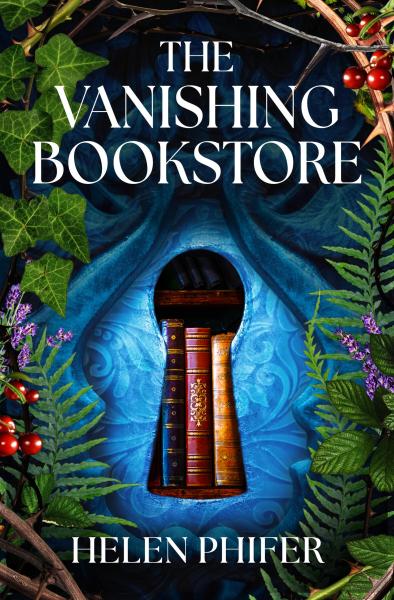
The Vanishing Bookstore by Helen Phifer only allows for time travel in one direction, as four witches and two Puritan men live life after life following the Salem witch trials. In 1692, the English women are accused of witchcraft, likely due to the unrequited lust of witch hunter George Corwin. Though Ambrose, George’s cousin, tries to save the youngest of the women, Isadora English, the six of them become locked in repeating lives. In modern day, Dora and Aunt Lenny live in London, an attempt to try something new to break the curse. But Dora’s forgotten her past all together—and Lenny and the others believe that it will be Dora who saves them from George Corwin’s murderous ways once and for all.
Over and over, these characters are reborn into new lives in a way that’s never really detailed. (Are the English sisters always born to the same family? Is Dora always parented by the same mysterious magical man in each lifespan? Or do they appear fully grown each time around, with only Dora having a childhood in each life? The novel never gets into it, simply describing the cursed characters as immortals, who don’t look the same in each life, but not really getting into the mechanics.) Certain canon events occur, as they would in a multiverse story: Dora’s mother, Lucine, always dies first. Dora always dies before she reaches the age of 35. And George Corwin always chases them down, determined to be their downfall and indulge his murderous urges. The one thing that hasn’t happened: Dora has yet to reclaim the magical book that she and Ambrose hid in 1692—and it’s that book and Dora’s power that may finally change their futures.
While the characters in the novel don’t leap through time, the narrative occasionally does. (It might have been served to offer more of these glances, as the flashback scenes do a fantastic job informing the modern storyline. A really lovely chapter in 1764 Salem shows how Ambrose’s love for Isadora is a constant throughout time and lives.) For several of the characters, their original lives and deaths in Salem are as vibrant as anything in the modern era. History constantly threads its way into the conversations and interactions with their world around them, in a way that the setting of modern Salem embraces.
Phifer does a fantastic job of embracing the Salem setting. Readers who have visited Salem will be tickled by all the references to familiar landmarks and the names of historical figures (including the villainous Corwin). The modern English women toe the line of being at once ancient witches and being modern shopkeepers, just as Salem itself hangs onto a troubled history and reframes it by embracing a witchy ambiance that was never present in Puritan times. Capturing this intentional dichotomy of modern Salem is one of the things Phifer does best as a writer.
The tone of the novel can be odd for the content. The detached narration, after the first chapter from Isadora’s point of view, gives the book a cozy feeling, even when George Corwin is threatening to murder people. The atmosphere Phifer creates never allows Corwin to be as ominous as he should be, given how he threatens the lives of Dora’s modern friends in London, and that dissonance doesn’t work as well in tone as it does in the setting.
At its core, The Vanishing Bookstore is a book about familial love, especially between generations of women. (The romance is a little less convincing, especially the timing of a romantic interlude, but it’s a very secondary focus of the story.) The frequent references to Salem’s history make it a good choice for readers already interested in the Salem witch hunts, while the narrative choices in how the story is told may make readers feel as though the narrative undercuts itself. Rating: 6/10.
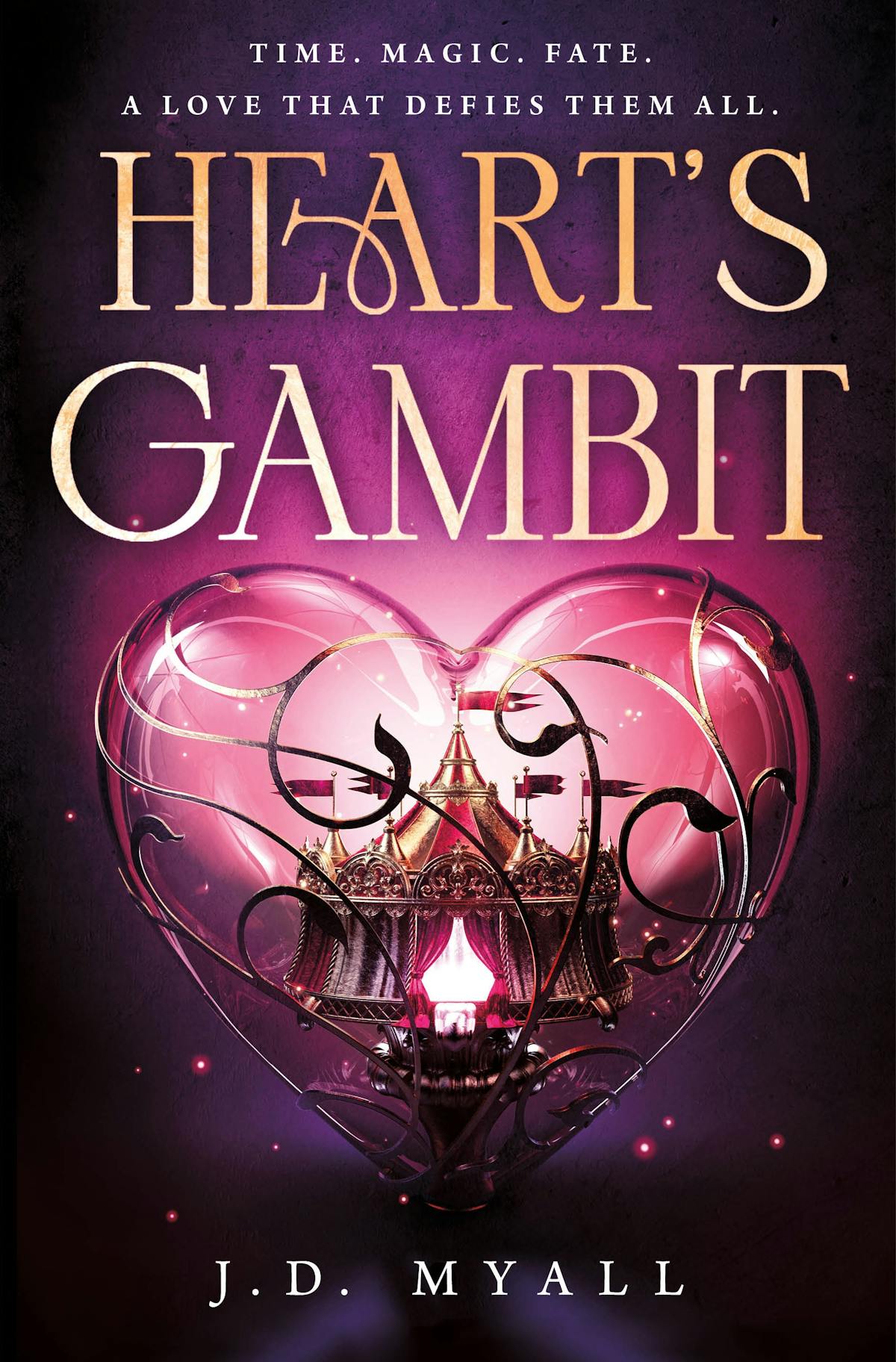
J.D. Myall’s Heart’s Gambit, on the other hand, travels back and forth across time periods, from a horrific 1860 plantation to an imagined future of glass skyscrapers and skywalks. The opening prelude shows the origins of the curse that afflicts the Baldwins and the Davenports: Sabine, the wife of a plantation owner, has made a bargain with the spirits of Grand Belle Island, giving her power over time—as long as she feeds her powers with blood. She creates a game, the Tethered Gambit, that will afflict two family lines. She grants freedom and magical powers to the Baldwins and Davenports, but with a price. Every so often, she will call on a member of each family to fight to the death in trials of her choosing. They will gain the powers of the person they kill in the trials, and she will gain continued powers in her own lifetime.
In the main storyline, which occurs primarily in 1922 and 2024 simultaneously, Emma Baldwin and Malcolm Davenport are both sick of the violence. While their families see each other as the enemy, Emma and Malcom both view Sabine as the true villain. When both are Tethered, instead of giving into the bloodlust that is part of the curse, they meet up and begin exchanging letters through time. (The magical mailbox, powered by fairies, is one of the most delightful and whimsical inventions of the story.) While the romance through letters trope doesn’t always work, here, it’s brilliant—both romantic leads go into their conversation with open eyes, unsure if they can trust each other, but soon realizing that their connection is deeper than any curse.
The set up feels like a grim mixture of Snow White’s evil witch and Romeo and Juliet, combined with real-world details of what it’s like to be Black in America at any time in history, and it works beautifully. The Baldwin and Davenport families are populated by interesting, conflicted characters who frequently do the wrong things for the right reasons—with the Davenports coming out slightly on top, as they move through history trying to make small changes that will bring about better futures, but not derail the timeline. While the magic doesn’t always feel grounded, the whimsy of it makes it easy enough to handwave, and the different locations and eras the narrative visits are all well drawn. The story is self-contained, except for the epilogue, which launches the surviving characters immediately into their next peril, so be wary of those final pages! Rating: 9/10.

